Our Courses
Take the first step toward your new future by selecting the path that resonates with you.
Certificate in High-Level Wellness and Vitality
Prerequisite: None
Duration: Approx. 6 months (BKP101 – 105 + RBT101)
Enrolment Fee: $100 (non-refundable)
Cost: $3,894 incl. GST ($649 per unit)
Upfront Payment: $3,699 incl. GST (5% discount – non-refundable)
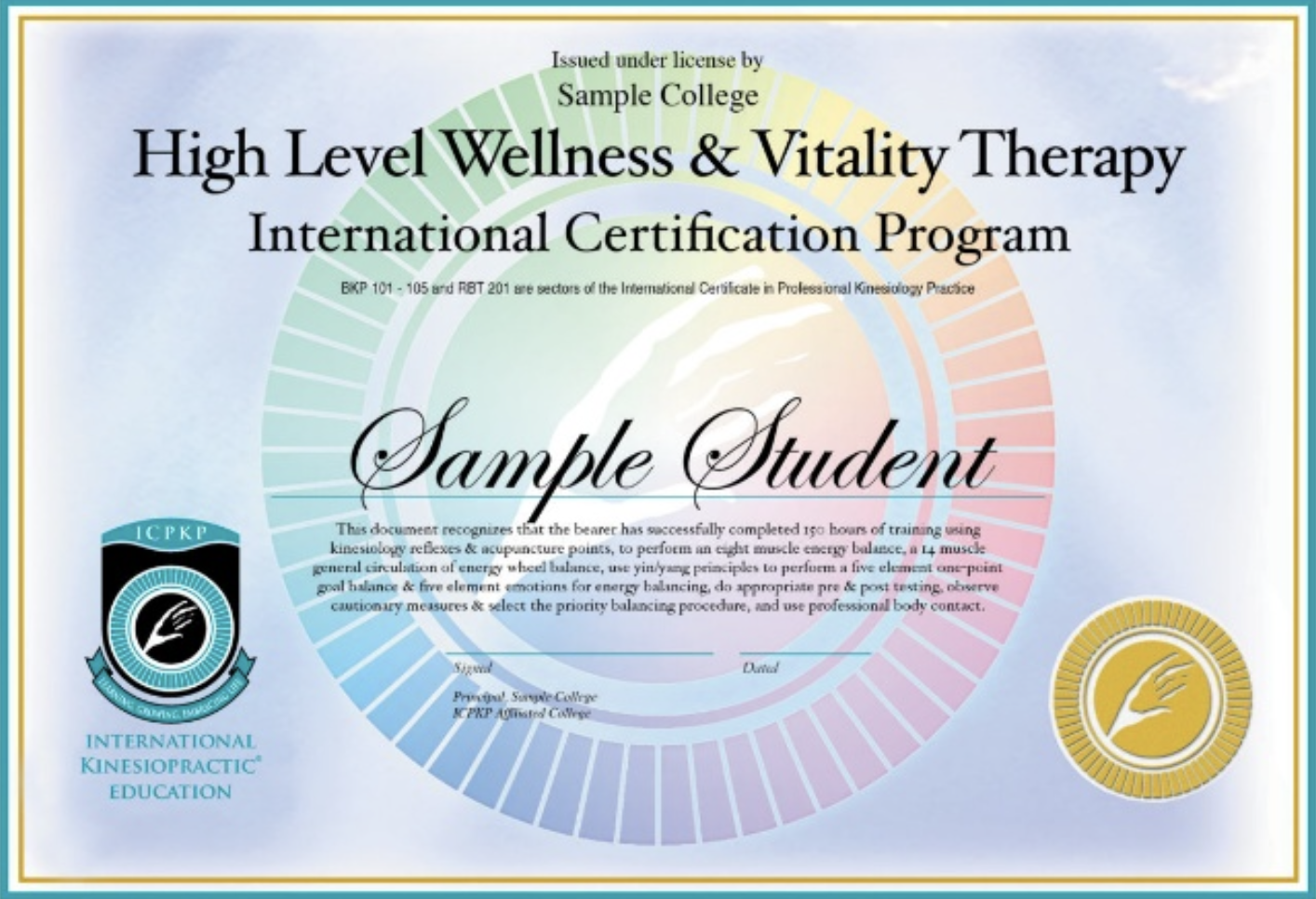
This entry-level qualification introduces the foundational principles of kinesiology and leads to the International Certification in High-Level Wellness & Vitality, also known as FPK™ Foundational Principles of Kinesiology.
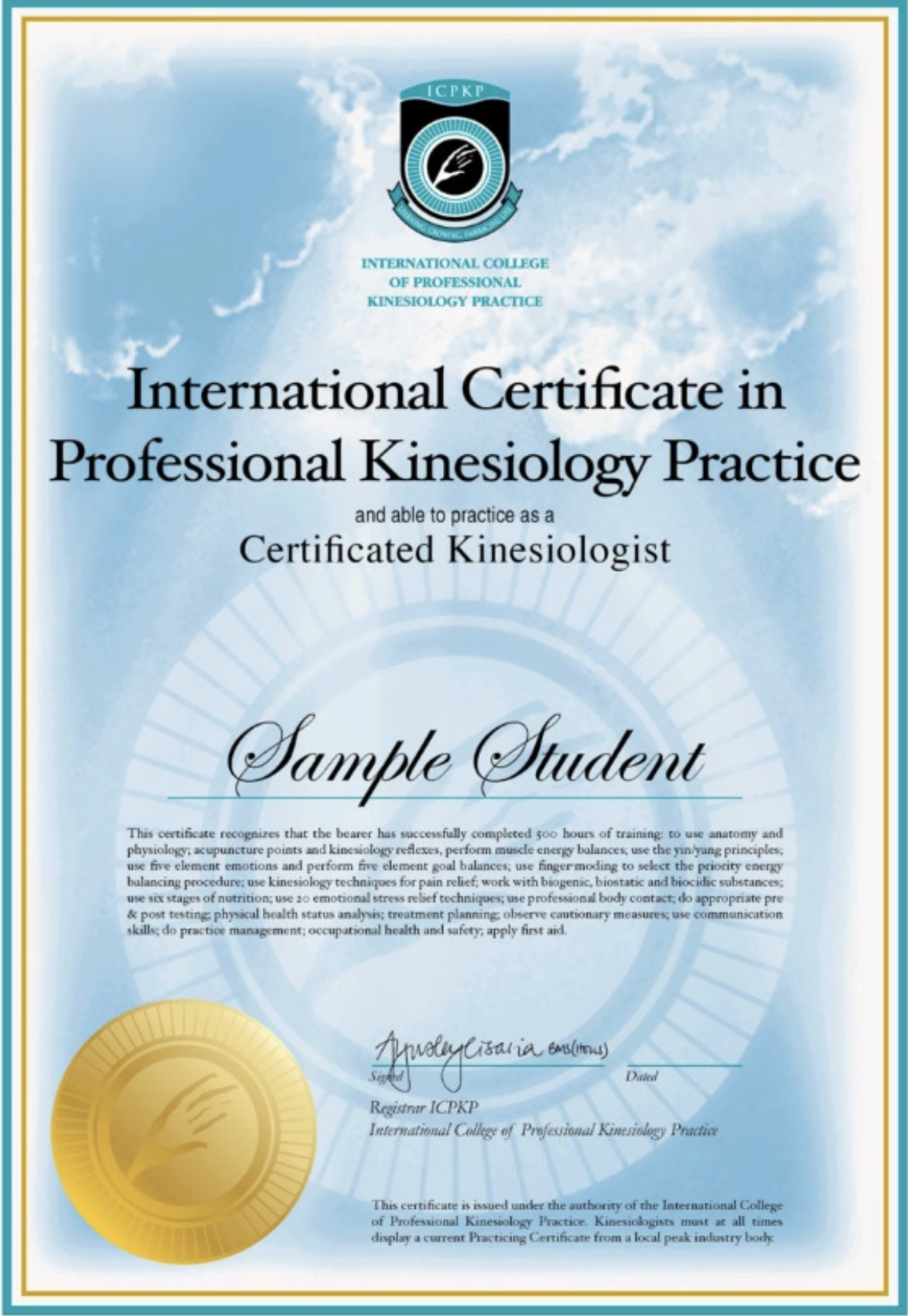
PKP Practitioner Certificate - Kinesiopractic® Level 1
Prerequisite: Completion of Certificate in High-Level Wellness & Vitality
Duration: Approx. 7 months
Cost: $4,543 incl. GST ($649 per unit)
Upfront Payment: $4,315 incl. GST (5% discount)
Full PKP Practitioner Certificate - Kinesiopractic® Level 1 Upfront: $8,015 incl. GST (5% discount) All upfront payments are non-refundable and non-transferable.
This qualification builds professional competency through ICPKP’s unique Finger Moding, goal-setting systems, emotional balancing, extensive technique databases and structured balancing protocols.
To graduate, students must complete:
12 Kinesiology modules (6 from the Certificate in High-Level Wellness & Vitality and 6 from the Level 1 course. BKP 106 – 110 + EMS201)
1 Anatomy & Physiology home-study unit
50 hours of student clinic (completed in class)
A current First Aid certificate (Valid for 3 years)
Five personal kinesiology sessions with a qualified PKP practitioner
Two Case studies
Empower Your Future with Bendigo Kinesiology: Enrol in Our Accredited Courses
Enrol Today
Unlock your potential and join our vibrant learning community at Bendigo Kinesiology, where we offer world-class training in professional kinesiology. Whether you are seeking personal transformation or a new career path, our team invites you to enrol in our upcoming intakes.
Step 1: Send an email to bendigokinesiology@gmail.com to request the enrolment form or request via button below.
Step 2: You will receive an enrolment form in a Google Doc format for you to complete.
Step 3: I will be in touch once your enrolment form has been viewed to arrange a time for an interview.


Frequently Asked Questions
-
On completion of the 13-month course, you will be awarded the PKP Practitioner
Certificate – Kinesiopractic® Level 1. In Australia, there are two professional
Kinesiology associations you may choose to join: AIK and AKA, each with different
membership levels and requirements. You can join as a student member before
becoming fully qualified. You may also choose to join other professional bodies
such as IICT and ATMS. Professional insurance is required before commencing
practice.
-
All units are delivered face-to-face, with the flexibility to move partially online if
required. Some additional learning units are completed at home at your own pace.
All class notes, Student Activities Journals and supplementary resources are
accessed via the ICPKP app, which has been specifically designed to support easy
navigation and learning.
-
Yes — absolutely. The online learning platform is very user-friendly. Simply log in,
select the video you wish to view and watch at your convenience. You can also easily
download and print your Student Activities Journal when needed.
-
Each unit includes class notes and a Student Activities Journal (SAJ) to be
completed. There is a short open-book online multiple-choice quiz after each unit.
At the end of the course, you will complete:
• A practical assessment, facilitated on a fellow student
• A 100-question open-book multiple-choice exam, completed in your own time
-
You will require an iPad or Android device, as all course content is delivered via the
ICPKP app. A massage table is also recommended so you can practise techniques;
this will be required in class from the second unit onward.
-
No. Kinesiology has expanded significantly over the past decade, with many
different approaches and workshops now available. This course teaches PKP
(Professional Kinesiology Practitioner) Kinesiology, delivered by ICPKP
(International College of Professional Kinesiology Practice). The PKP system was
developed by Dr Bruce Dewe, a medical doctor with over 40 years’ experience, and
Joan Dewe. Established in the 1980s, PKP utilises a unique finger-mode database
system, combined with muscle testing, to allow the client’s subconscious to
communicate what is needed for healing. Within the first 13 months, students learn
approximately 50 finger-mode techniques, addressing the energetic, emotional
and structural bodies.
-
A minimum of 10 - 15 hours of practice per month, per unit is required. Additional
practice is strongly encouraged, as repetition builds confidence and competence.
Practising on a variety of people not only enhances learning but also helps you
begin building a future client base. How exciting!
-
Yes. Many students feel anxious about returning to study — this is very normal. There
are no “bad” students; a willingness to learn is what truly matters. With over 30 years
of teaching experience across all ages, I understand that past school experiences
can resurface. My role is to support, adapt teaching methods and present material
in a clear, accessible way. Learning Kinesiology naturally caters to all learning styles,
and you are never expected to memorise content — notes and resources are always
available to you
-
In 2028 I will be offering the Diploma of Dietary and Nutritional Science.
The 13-month International PKP Certificate provides a strong foundation to begin practising as a Kinesiologist. I am happy to refer graduates to other colleges for the other diplomas. Possible pathways include:
• Diploma of Learning, Metaphysical, Holographic & Vibrational Energies
• Diploma of Energy Psychology
• Diploma of Musculoskeletal Rehabilitation & Reintegration.
-
Income depends on how many hours you choose to work. As a general guide:
• Student practitioners: ~$60 - $80/hour
• Fully qualified practitioners: $100–$150/hour
• Senior practitioners: $150–$300/hour
-
Yes — demand is growing. Graduates work in clinics, corporate wellness, sporting
environments or private practice. Many enjoy flexible, fulfilling careers.
-
Success is closely linked to commitment and application. Over 95% of dedicated
graduates begin practicing or advance their careers during, or shortly after, their
first year.
-
• Excellence in delivery: Highly experienced educators using ICPKP’s student-centred curriculum.
• Expert leadership: Lead educator Anthea McEniry has over 30 years teaching experience in Australia and the UK and is a Senior Kinesiopractor® and ICPKP Faculty Member.
• Supportive environment: Professional, respectful, engaging and feedback-driven.
• Value for money: Small class sizes, personalised attention and blended learning.
• Strong clinical focus: Students practise each technique in class and on three people outside class, building real-world confidence.
• Recognised qualifications: Graduates are eligible to apply for membership with AIK or AKA.
• Modern pathways to success: Innovative, well-structured learning in a supportive environment.
-
Anthea is the founder and lead educator at BKC. She holds:
• Bachelor of Applied Science (Physical Education)
• Bachelor of Education (Indonesian)
• Graduate Diploma of Education (Secondary)
Anthea is a Senior Kinesiopractor®, an ICPKP Faculty Member and has further training through the College of Complementary Medicine and LEAP training.
Anthea is also a qualified Biodynamic Craniosacral therapist.
-
Yes. During the enrolment process, we will discuss your previous qualifications, Kinesiology training or complementary health studies to assess your existing knowledge and experience.
-
Absolutely — I would love to chat. Please email bendigokinesiology@gmail.com and
I will organise a time to speak with you and answer any further questions.